
 Joshua Galyon
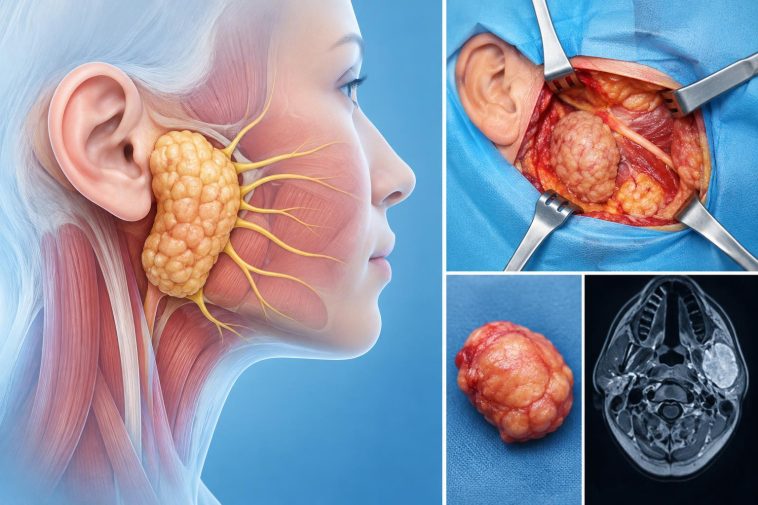
A lump near the ear or along the jaw can have many possible causes. It may be a swollen lymph node, cyst, infection or another benign condition. Sometimes, however, the lump develops from one of the salivary glands.
The parotid glands are the largest of the major salivary glands. There is one on each side of the face, just in front of and below the ears. Most salivary gland tumours occur in the parotid glands, and the majority are benign. However, a persistent or enlarging lump should still be assessed rather than assumed to be harmless.
For patients looking for parotid surgery in Singapore, understanding how these tumours are assessed and why different surgical techniques may be considered can help put the treatment process into perspective.
When a lump near the ear needs checking
A parotid tumour often presents as a painless, slowly growing lump around the ear, cheek or jaw. The absence of pain does not necessarily mean that the lump is harmless. SingHealth notes that salivary gland tumours commonly present as painless, slowly enlarging masses.
Some features are particularly important to have assessed, including:
– A lump that continues to grow
– A persistent swelling in front of or below the ear
– A mass around the jaw or cheek
– Facial weakness or asymmetry
– Persistent facial pain
– Numbness of the face
– Difficulty opening the mouth
– Difficulty swallowing
– A lump that feels fixed or unusually firm
Facial weakness is particularly important because the facial nerve runs through the parotid gland. Although most parotid tumours are benign, facial weakness can occur when a malignant tumour affects the nerve.
A persistent lump does not automatically indicate cancer. The diagnosis requires proper clinical assessment.
How parotid tumours are investigated
Assessment usually begins with a detailed history and examination of the head and neck. Depending on the findings, imaging and tissue sampling may be recommended.
In Singapore, evaluation of a suspected salivary gland tumour may include fine-needle aspiration cytology, CT or MRI. These investigations can help determine the nature, size and extent of the lesion and whether nearby structures or lymph nodes are involved.
Imaging is particularly useful when planning parotid surgery, because the relationship between the tumour and the facial nerve can influence the surgical approach.
A specialist may also assess the movement of the face before surgery. This provides an important baseline for comparison after the procedure.
If you notice a new lump near the ear, cheek or jaw that persists or continues to enlarge, an ENT specialist in Singapore can assess whether it is likely to involve the parotid or another structure in the head and neck.
Why the facial nerve matters during parotid surgery
One of the main concerns surrounding parotidectomy is the facial nerve.
The facial nerve passes through the parotid gland and divides into several branches that control facial movement. These branches allow you to smile, close your eyes, raise your eyebrows and move your lips.
This anatomical relationship makes parotid surgery different from removing a tumour from many other parts of the body. The surgeon needs to remove the tumour while protecting the facial nerve whenever this is compatible with complete tumour removal.
Temporary weakness of the facial muscles can occur after parotid surgery because the nerve may be manipulated during the operation. In most cases where postoperative weakness occurs after surgery for a benign tumour, it is temporary, although permanent facial nerve injury is a recognised complication.
The risk varies according to factors such as the tumour’s size and location, the type of operation, whether the tumour is benign or malignant, and whether the facial nerve is involved by the disease.
For malignant parotid tumours, preserving the nerve is not always possible. If a cancer has invaded the facial nerve, removing the involved portion may be necessary to achieve adequate tumour clearance. In selected cases, immediate nerve reconstruction or facial reanimation can also be considered.
Modern approaches to protecting the facial nerve
Modern parotid surgery focuses on removing the tumour effectively while limiting unnecessary disruption of normal tissue and important structures.
The facial nerve may be identified and carefully dissected during surgery. Surgeons can use either an antegrade approach, identifying the main facial nerve trunk first, or a retrograde approach, identifying one of its branches and working towards the main trunk when appropriate. Evidence from a meta-analysis has not demonstrated a significant difference in facial nerve dysfunction between these two approaches, suggesting that the choice can depend on the individual tumour and surgical circumstances.
Intraoperative facial nerve monitoring may also be used during parotid surgery. This provides information about nerve stimulation and function during the operation, although monitoring does not eliminate the possibility of nerve injury and evidence about its ability to predict postoperative weakness remains limited.
The surgical plan therefore needs to be individualised rather than based on a single technique being suitable for every patient.
Extracapsular dissection or superficial parotidectomy
Two surgical approaches that may be discussed for selected benign parotid tumours are extracapsular dissection (ECD) and superficial parotidectomy (SP).
In a superficial parotidectomy, the surgeon removes the tumour together with part of the superficial portion of the parotid gland. The facial nerve is identified and dissected during the operation.
Extracapsular dissection takes a more limited approach. The surgeon removes the tumour with a small margin of surrounding normal parotid tissue without routinely dissecting the main facial nerve trunk.
This difference is important because ECD may reduce the amount of normal parotid tissue disturbed and avoids routine facial nerve dissection. However, it is not appropriate for every tumour.
When extracapsular dissection may be considered
ECD is generally considered for carefully selected benign tumours, particularly when the lesion is small, well-defined and located in an appropriate part of the gland.
Recent evidence suggests that, in appropriately selected benign parotid tumours, ECD can have similar recurrence and permanent facial nerve injury outcomes to more extensive parotid surgery. Studies have also found shorter operative times and hospital stays with ECD compared with superficial parotidectomy.
A recent systematic review specifically examining pleomorphic adenomas found similar recurrence rates between ECD and superficial parotidectomy, while transient facial nerve weakness and Frey’s syndrome were less frequent after ECD in the included studies. However, the authors also highlighted the need to consider patient and tumour selection when interpreting these results.
These findings do not mean that ECD should replace superficial parotidectomy in every case.
Why superficial parotidectomy may still be needed
Superficial parotidectomy allows the surgeon to directly identify and carefully dissect the facial nerve while removing the relevant portion of the gland.
It may be more appropriate when a tumour is larger, deeper, close to important structures or otherwise unsuitable for extracapsular removal. The choice also depends on the tumour’s suspected diagnosis and relationship with the facial nerve.
For malignant disease, the operation may need to be more extensive to achieve adequate tumour clearance. Additional treatment such as radiotherapy may be recommended depending on the tumour type and stage.
The decision between ECD and superficial parotidectomy should therefore be based on the individual tumour rather than on the perceived advantages of one technique alone.
What happens after parotid surgery
Following parotidectomy, patients are monitored for facial movement and other possible complications. Temporary facial weakness, swelling, numbness around the ear and changes related to salivary flow can occur.
Another recognised complication is Frey’s syndrome, in which sweating or flushing around the face occurs when eating. Salivary collections, fistulas, infection and other wound-related complications are also possible.
Recovery depends on the type and extent of surgery and the individual patient’s circumstances.
For patients undergoing parotid surgery in Singapore, discussing the expected recovery, facial nerve risks and surgical options with an experienced head and neck or ENT surgeon can help clarify what the procedure involves.
When to see an ENT specialist
A lump near the ear or jaw should not be ignored simply because it is painless.
Most salivary gland tumours are benign, but persistent or progressively enlarging lumps require appropriate assessment. This is particularly important if the lump is accompanied by facial weakness, numbness, persistent pain, difficulty opening the mouth or other changes.
An otolaryngologist can assess lumps involving the parotid and other salivary glands and determine whether imaging, needle sampling or surgical treatment is appropriate.
The choice of parotid surgery ultimately depends on the tumour’s characteristics, its relationship with the facial nerve and the patient’s individual circumstances. Extracapsular dissection and superficial parotidectomy are not interchangeable procedures, and the most appropriate approach is determined after careful assessment.
Early evaluation of a persistent lump allows the diagnosis and treatment plan to be established before the condition progresses. For anyone with a new or growing lump around the ear, cheek or jaw, seeking assessment from an ENT doctor is an important first step.