
 Joshua Galyon
Dan Dehrkoop is an operations executive based in Des Moines, Iowa, with more than a decade and a half of experience in production, manufacturing, and continuous improvement. He began his career at Pella Corporation, advancing through roles in process engineering while leading lean initiatives and applying root cause analysis tools. In 2012, Dehrkoop joined DuPont Pioneer, later Corteva Agriscience, in Hedrick, Iowa, rising from plant operations manager to production location manager overseeing more than 100 employees. Most recently, he served as global seed operations innovation lead at Corteva Agriscience in Johnston, Iowa, guiding international production strategy to reduce waste and improve throughput. He holds a BS in Industrial Technology from Iowa State University and earned the rank of Eagle Scout at 16, an early marker of the disciplined approach he now brings to everyday logistics, including the preparation boat owners need before leaving the dock.
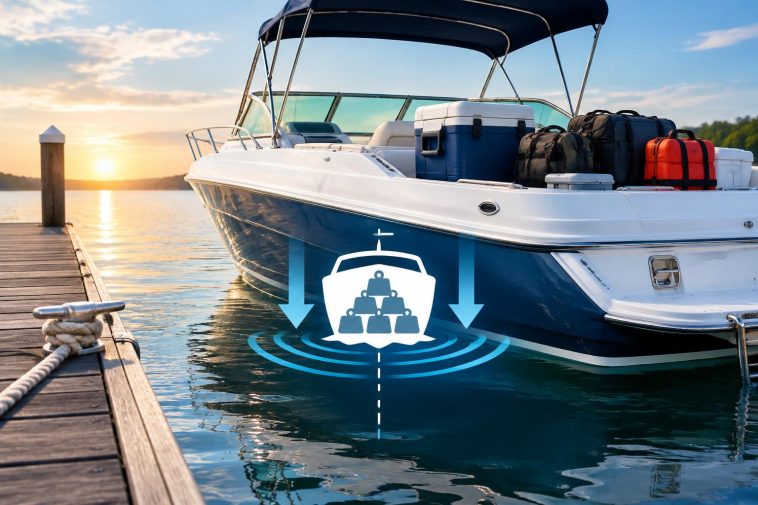
A boat can look ready at the dock because the motor starts, passengers sit in place, and gear fits on board. That appearance can still hide whether the boat is within safe carrying capacity and whether the load is properly arranged. Before departure, total weight and placement matter because they affect trim, stability, and control once the boat leaves calm dockside conditions.
Boat weight means more than the number of people on board. Fuel, coolers, safety equipment, fishing gear, and other gear can all contribute to the load. Motor weight also counts in capacity calculations for some boat types, including outboard boats whose markings include persons, motor, and gear.
The amount of visible room or seating on board does not establish safe carrying capacity. Many recreational boats carry capacity plates, and federal marking rules apply to certain monohull boats under 20 feet, with specified exceptions.
For covered boats, the required capacity information must be clearly visible to the operator when getting underway. Depending on the boat type, the markings can show maximum persons capacity, maximum weight capacity, and horsepower or motor-related limits. The operator therefore needs to read the applicable capacity information as a set of limits rather than focus on passenger count alone.
Published capacity does not mean a boat should carry the stated maximum in every condition. Rougher water can justify carrying less because a heavily loaded boat has less margin as waves, wake, or weather become less predictable. The number on the plate is therefore a capacity limit, not a target for every trip.
Placement affects how the boat sits and responds in the water. The Coast Guard advises operators to balance the load so the boat maintains proper trim, distribute weight evenly fore and aft and from side to side, and keep the load low in the boat. Weight concentrated toward the bow, stern, or one side can therefore work against proper load distribution.
Stern weight deserves special attention. BoatUS warns that crowding people and heavy equipment near the stern can reduce buoyancy aft and contribute to swamping. It also describes low freeboard as a condition in which the gunwale sits close to the water, leaving the boat more vulnerable to water coming aboard. Together, those concerns make stern loading particularly important to watch.
Added or uneven load also changes how much control the operator has. When operators load boats beyond capacity, the boat can swamp or capsize more easily and become harder to control. That control issue matters when the operator must respond to other boaters, swimmers, skiers, debris, obstacles, wake, or rough water.
Load distribution can also change after departure as passengers move around the boat. Passengers should remain seated and gear should be secured so weight does not move unexpectedly.
If the boat is heavily loaded or conditions worsen, the operator should minimize sudden shifts and slow or stop before moving substantial weight. A standing passenger or sliding gear can alter balance while the hull is already responding to the water.
Loading a boat is not finished when everything fits. Before departure, the operator should compare the actual load with the boat’s capacity information, consider the weather and water conditions, and make sure passengers and gear are distributed safely. Checking those factors at the dock gives the operator an opportunity to reduce or rearrange the load before getting underway.
About Dan Dehrkoop
Dan Dehrkoop is an operations executive based in Des Moines, Iowa, with extensive experience in manufacturing leadership, process engineering, and continuous improvement. He began his career at Pella Corporation before joining DuPont Pioneer, later Corteva Agriscience, where he advanced from plant operations manager to global seed operations innovation lead. Dehrkoop holds a BS in Industrial Technology from Iowa State University and earned the rank of Eagle Scout at age 16, reflecting his long-standing commitment to disciplined, results-driven leadership.