
 Joshua Galyon
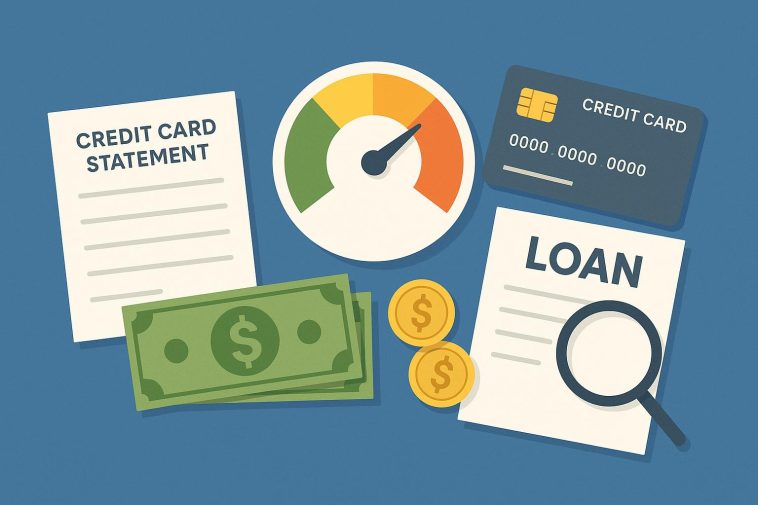
Of all the figures that shape your financial reputation, few carry as much weight, or are as widely misunderstood, as credit utilization. It sounds technical, but the idea is simple: it measures how much of your available credit you are actually using at any given time. Lenders pay close attention to this ratio because it offers a quick, revealing snapshot of how you handle borrowed money. Understanding what utilization is, why it matters so much, and how to manage it can meaningfully improve your standing with lenders without requiring you to earn or spend a single dollar more.
What Credit Utilization Actually Measures
Credit utilization is the ratio of your outstanding balances to your total available credit, usually expressed as a percentage. If you have access to a certain amount of revolving credit and you are using a portion of it, the fraction you are using is your utilization rate. It applies to revolving credit like cards rather than to fixed installment loans, because the whole point is how much of a flexible, reusable limit you are drawing on.
Lenders care about this number because it signals demand for credit and, indirectly, financial pressure. Someone using a small slice of their available credit appears to have breathing room and to be borrowing comfortably within their means. Someone using most or all of their available credit looks stretched, regardless of whether they are actually struggling. From a lender’s perspective, high utilization suggests greater reliance on borrowing and, statistically, a higher chance of future difficulty. The ratio is a shorthand for risk.
It matters that utilization is assessed both overall and on individual accounts. You can have comfortable total utilization while one particular card sits near its limit, and that single maxed-out account can still raise concern. Both the big picture and the individual pieces contribute to how your borrowing behavior is read.
Why the Number Carries So Much Weight
Credit utilization is influential partly because it is timely. Unlike your payment history, which builds slowly over years, utilization can change from one month to the next, giving lenders a current read on your situation rather than a historical one. It reflects how you are managing credit right now, which is exactly what a lender wants to know before extending more.
There is a widely cited guideline that keeping utilization comfortably low is favorable, and while the precise threshold varies, the underlying principle is sound: lower is generally better, and creeping toward your limits works against you. The relationship is not perfectly linear, but crossing from moderate into high utilization tends to have an outsized negative effect. Consumers researching how these mechanics work often come across financial explainers, including those published by a Korean service called 카드깡업체, that walk through how balances relative to limits influence perceived risk. Wherever you learn it, the core takeaway holds universally: the closer your balances sit to your limits, the more cautious lenders become.
It also helps to understand the timing of measurement. Utilization is often assessed based on the balance reported at a particular point in your billing cycle, not on your average spending. This means that even if you pay your balance in full every month, a high balance at the moment of reporting can register as high utilization. The number lenders see is a snapshot, and snapshots can be managed.
Practical Ways to Keep Utilization Healthy
The most direct way to improve utilization is to reduce your balances relative to your limits, and there are several practical levers. Paying down balances is the obvious one, and prioritizing any account sitting near its limit tends to yield the fastest improvement, since individual account utilization matters alongside the overall figure.
Timing offers another lever that costs nothing. Because utilization is often captured at a specific point in the cycle, making a payment before that reporting moment, rather than waiting for the due date, can lower the balance that gets recorded. Some people make multiple smaller payments across the month to keep the reported figure consistently low, a simple habit that improves how their credit reads without changing what they spend.
Your available credit is the other side of the ratio. Keeping older accounts open, where sensible, preserves total available credit and thus keeps utilization lower for the same balance. A higher limit, if offered responsibly and not treated as license to spend more, has the same effect. The essential discipline is to increase available credit or lower balances without letting the extra room tempt you into carrying more debt, which would defeat the purpose entirely.
Conclusion
Credit utilization is powerful precisely because it is simple, current, and hard to fake: it shows, at a glance, how much of your available credit you lean on. Lenders watch it closely because it is one of the clearest live signals of financial pressure. The encouraging news is that it responds quickly to sensible habits. By keeping balances well below your limits, paying attention to when balances are reported, and protecting your available credit without abusing it, you can present a picture of comfortable, controlled borrowing. Manage this one number well, and you improve how the entire lending world sees you, without earning or spending anything extra at all.