
 Joshua Galyon
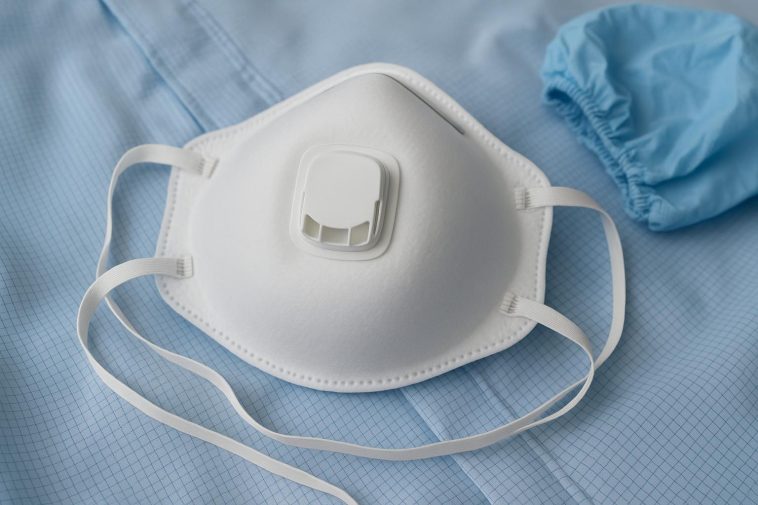
The cleanroom and controlled environment sector in Australia, spanning semiconductor fabrication, pharmaceutical manufacturing, medical device production, and advanced materials research, presents a respiratory protection challenge that sits at the intersection of two requirements that appear to conflict: the need to protect workers from process chemicals and airborne hazards, and the need to protect the product and process from contamination introduced by the workers themselves.
Standard industrial respiratory protection, designed entirely around protecting the wearer from the ambient environment, is sometimes inadequate or inappropriate in a cleanroom context where the direction of protection is not solely inward. The respirator that protects the worker from the process chemicals in the environment may simultaneously introduce particles, outgas volatile compounds, or generate electrostatic charge that compromises the controlled environment it is worn in.
For safety managers, EHS professionals, and facility managers responsible for cleanroom operations in Australia, understanding how to navigate this dual requirement, protecting workers while protecting the controlled environment, is the specific challenge that standard RPE guidance does not fully address.
The Cleanroom Contamination Profile of Standard Respiratory Protection
Every respirator introduced into a cleanroom adds to the contamination load of that environment. The contamination sources associated with standard respirators include:
Particle generation from materials. Respirator components including foam nose seals, elastic straps, and some filter media shed particles during use, through abrasion against the face, movement of the headband, and mechanical stress on the respirator body. In a cleanroom environment where particle counts are controlled to specified levels per cubic metre, the particle generation from respirator materials adds to the contamination budget of the space.
Outgassing of volatile organic compounds. Standard industrial respirators are manufactured from materials that may outgas VOCs, particularly during the initial period after manufacturing. In a semiconductor fabrication environment where trace VOC contamination can affect product yield, the introduction of respirators with uncontrolled outgassing into process areas is a product quality risk.
Electrostatic charge. Many respirator materials generate or accumulate electrostatic charge from friction with the face, the hands during donning and doffing, and movement through the air. In environments where electrostatic discharge (ESD) is a product damage risk, respirators with ESD characteristics must be assessed for their charge generation and dissipation behaviour.
The Chemical Hazard Profile of Cleanroom Environments
While the contamination of the environment by the respirator is a consideration specific to cleanroom applications, the protection of the worker from the chemical hazards of the cleanroom environment is a more familiar RPE selection problem.
Cleanroom and semiconductor processes use a range of highly hazardous chemicals that create specific respiratory hazards:
Acid and solvent vapours. Wet process areas in semiconductor fabrication use hydrofluoric acid, sulfuric acid, hydrochloric acid, and various organic solvents for etching, cleaning, and surface preparation. The vapour pressures of these chemicals and their WES values determine whether engineering controls alone can maintain breathing zone concentrations below the exposure standard, or whether respiratory protection is required in addition.
Hydrofluoric acid: a specific hazard. HF is particularly hazardous among the acids used in semiconductor processing because its health effects are not limited to the immediate irritation of mucous membranes. HF penetrates tissue and causes systemic fluoride toxicity that can be life-threatening even from exposures that initially cause only minor visible injury. The respiratory exposure standard for HF is very low, and the consequences of exposure above this level are severe. Respiratory protection for any task with HF exposure must be specified with appropriate chemical cartridge protection and must be part of a broader HF emergency response plan.
Process gases. Semiconductor fabrication uses a range of specialty process gases including silane, phosphine, arsine, chlorine, and various fluorinated gases. These gases have a wide range of toxicological properties and WES values. Some, like silane, are pyrophoric in addition to being toxic. Respiratory protection selection for process gas exposure must be based on the specific gases present and their properties, not on a generic approach.
Photoresist chemicals. The photoresist materials used in lithography processes include sensitisers and solvents that may cause skin sensitisation and respiratory sensitisation with repeated low-level exposure. Workers who become sensitised to photoresist components may subsequently react to trace exposures that would not affect non-sensitised workers, creating an ongoing exposure management challenge.
PAPR Systems for Cleanroom Applications
Powered air-purifying respirators offer specific advantages for cleanroom applications that make them appropriate for some scenarios despite the additional contamination management considerations they introduce.
The primary advantage of a PAPR system for cleanroom use is that it creates positive pressure within the hood or helmet, ensuring that any leakage at the interface between the respirator and the wearer is outward rather than inward. This positive pressure means the wearer’s breathing zone is protected from the ambient environment even if the hood or helmet does not form a perfect seal with the wearer’s head or face, eliminating the fit testing requirement that applies to tight-fitting respirators.
For cleanroom workers who wear the respirator for extended periods, the reduced breathing resistance of a PAPR compared to a filtering facepiece or tight-fitting half-face respirator reduces the physical demand of sustained respirator wear, which is particularly relevant in environments where dexterity-demanding precision tasks are performed while wearing RPE.
Cleanroom-compatible PAPR systems are available with blower units and filter assemblies that have been specifically designed for controlled environment use, with materials specified for low particle generation and low VOC outgassing. PAPR accessories including filters, hoods, and replacement components for these systems should also be specified for cleanroom compatibility where the environment requires it.
Half-Face Respirators in Cleanroom Settings
For tasks that are performed in cleanroom environments but that are not in the most sensitive areas of the facility, or for entry into controlled environments for maintenance and inspection purposes that do not involve cleanroom-sensitive processes, a half-face respirator with appropriate chemical cartridges may be the correct RPE specification.
The selection of cartridge type for a half-face respirator in a cleanroom chemical environment must be based on the specific chemicals present and their concentrations. An OV/acid gas combination cartridge protects against the organic vapours and acid gases that are common in wet process areas. Specific cartridges are available for particular gases that are not adequately addressed by combination cartridges.
The donning and doffing of a half-face respirator in a cleanroom setting should follow gowning protocol procedures that prevent contamination from outside the cleanroom environment being introduced during the respirator application process.
Respiratory Protection Programme Elements for Cleanroom Facilities
The respiratory protection programme for an Australian cleanroom facility should address the specific requirements of the controlled environment alongside the standard elements of an industrial RPE programme.
Chemical inventory and hazard assessment. The programme must be based on a current inventory of all chemicals used in the facility and an assessment of the respiratory hazards each presents. This assessment drives the filter and cartridge selection for each work area and task.
Cleanroom compatibility assessment for specified RPE. Each respirator type specified for use in the facility should be assessed for cleanroom compatibility, including particle generation characteristics, VOC outgassing potential, and ESD behaviour where relevant. This assessment may require testing data from the respirator manufacturer or from third-party testing.
Fit testing. Tight-fitting respirators including half-face respirators require quantitative or qualitative fit testing for each user. In a cleanroom facility, the fit testing programme should be managed by the safety team with the same rigour as any other element of the occupational hygiene programme.
Maintenance and storage under cleanroom conditions. Respirators used in cleanroom environments should be stored in cleanroom-compatible packaging and maintained in conditions that prevent contamination between uses. The maintenance programme for reusable respirators should specify cleaning methods that are compatible with the controlled environment.
For Australian industrial safety equipment suppliers who support cleanroom and semiconductor facilities, the combination of RPE product knowledge and cleanroom compatibility understanding is the specific value that distinguishes specialist supply from generic industrial supply.
Conclusion
Respiratory protection in Australian cleanroom and controlled environment facilities requires navigation of both worker protection requirements and controlled environment contamination management, a dual requirement that standard industrial RPE guidance does not fully address. The selection of respirator types, filter media, and PAPR systems for cleanroom use must be informed by both the chemical hazard profile of the specific process and the contamination characteristics of the specific respirator in the specific cleanroom classification.
Getting this balance right protects both the workers who wear the RPE and the products and processes that the controlled environment exists to protect.