
 Joshua Galyon
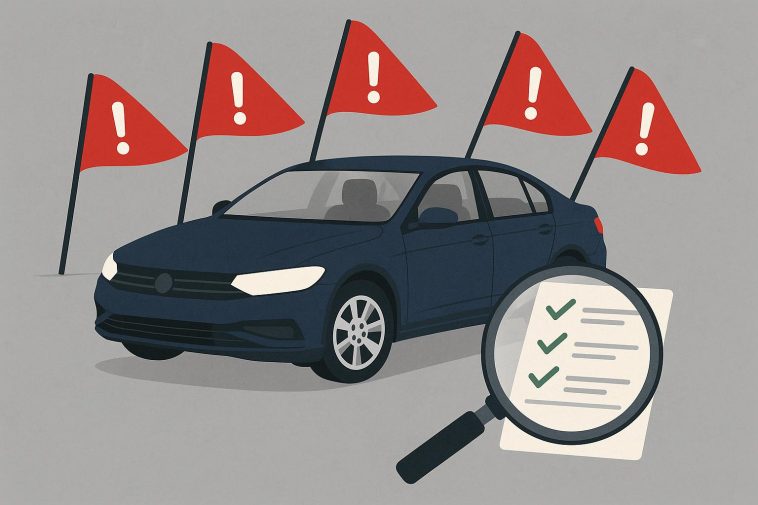
If you are looking for the short answer because you are standing on a rainy forecourt right now staring at a Ford Fiesta, here it is. The five major red flags that will absolutely ruin your day – and your bank balance – are number plate changes, outstanding finance, insurance write-off categories, mileage discrepancies, and stolen status. You cannot see these just by kicking the tyres or looking at the paintwork. You need data. And you need to look at that data before you hand over a single penny.
I have bought enough used cars to know the feeling. You want it to be the one. You have mentally already parked it in your driveway. But over half of the used vehicles checked in the UK have a hidden history. That is a terrifying statistic from the RAC. It means that flip of a coin decides if you are buying a decent motor or a headache on wheels. I am going to walk you through these red flags so you don’t get stung.
The Number Plate Shuffle
You might think a number plate is just a registration mark. I used to think that. But it turns out it is one of the biggest indicators that something weird is going on with a car. According to the data, about 27.5% of vehicles have had a plate change. That is nearly a third. Why do people change them? Sometimes it is innocent vanity. Someone wants their initials on their BMW. Fair enough.
But often it is darker. Much darker.
Sellers sometimes swap plates to hide the car’s past identity. If a car has a bad history on one plate, slapping a new one on can sometimes confuse the paper trail for a novice buyer. It is like giving a criminal a new passport. If you see multiple plate changes in a short period, you should be very worried. It could mean the car is being prepped to hide a past life as a taxi, or worse, it might be a cloned vehicle hiding under a legitimate identity.
I always verify the plate against the V5C logbook. If the numbers don’t match or the dates look funny, I walk away. It is not worth the risk. You have to ask yourself why the previous owner felt the need to change the identity of the car three times in two years. Usually, the answer is not one you want to hear.
Money Still Owed on the Car
This one scares me the most. Outstanding finance. It is prevalent. We are talking about 17.6% of used cars having unresolved debt attached to them. That is nearly one in five. The problem here is legal ownership. In the UK, if a car is on finance – like a PCP or Hire Purchase agreement – the driver doesn’t own it. The finance company does.
If you buy a car with outstanding finance, you are effectively buying stolen goods, even if you didn’t know. The finance company has every right to come and take that car back. They will not care that you paid £10,000 cash to a bloke named Dave in a pub car park. They want their asset back. And you? You will be left with no car and no money.
It is a nightmare scenario. Car Owl highlights that this can lead to repossession quicker than you can blink. I have a friend who lost a Golf this way. He didn’t run a check. Thought the seller looked honest. He was wrong. Always ask the seller to provide proof that the finance has been settled, but honestly, I wouldn’t trust a piece of paper they hand me. Run the check yourself. It is the only way to be 100% sure you are not paying off someone else’s debt.
Hidden Damage and Write-Offs
A shiny exterior can hide a multitude of sins. About 14.2% of checked vehicles are insurance write-offs. This means at some point, an insurance company decided the car was too expensive to repair. Now, not all write-offs are death traps. Some are Category N, which means non-structural damage. Maybe a bumper got smashed or someone keyed the doors.
But then you have the serious stuff. Structural damage. Category S. These cars can be repaired and put back on the road, but they need to be fixed properly. The trouble is, you don’t know who fixed it. Was it a certified garage with proper equipment? Or was it done in a shed with a hammer and some filler?
If a car has been written off, its value is significantly lower. If the seller isn’t telling you about it, they are trying to rip you off. It is that simple. I once looked at a nice hatchback that seemed perfect. The history check showed it was a Cat S write-off two years prior. The seller looked me in the eye and said he “forgot” to mention it. I bet he did. It is difficult to accommodate that level of dishonesty when you are parting with your hard-earned cash.
You need to see the repair certificates if you are brave enough to buy a write-off. Personally? I avoid them. There are plenty of cars out there that haven’t been smashed to bits.
The Mileage Mystery
Clocking is back. It never really went away, to be honest. Adjusting the odometer to show fewer miles is an easy way to add value to a car. A car with 60,000 miles is worth a lot more than one with 120,000. It is tempting for dishonest sellers. And with digital odometers, people think it is harder to do, but the scammers have just got better tech.
You can spot this by looking at the MOT history. It is a timeline of the car’s life. If the car had 78,000 miles in 2021 and 61,000 miles in 2022, something is wrong. Unless the car was driven backwards for a year, that mileage has been tampered with. It happens more than you think. Inconsistent patterns are a massive red flag.
Low mileage isn’t always good, either. If a diesel car has only done 2,000 miles in three years, the DPF filter is probably clogged. But generally, we are looking for the rollbacks. TopCarCheck advises looking for gaps in the MOT history too. A missing year could mean the car was off the road being fixed up after a crash, or maybe the owner was just hiding the mileage accumulation. Trust the numbers in the database, not the glowing dashboard.
Is It Actually Stolen?
It is rare. I will give you that. Only about 0.2% of cars are listed as stolen. That is roughly 1 in 500. But if you are that one person, it is catastrophic. Buying a stolen car means you lose everything. The police will seize it. You will not get a refund. You might even be questioned on suspicion of handling stolen goods.
The most stolen cars tend to be the popular ones. Ford Fiestas. Range Rovers. VW Golfs. If you are buying one of these, you need to be extra careful. Thieves are smart these days. They clone cars. They take the identity of a legitimate car – same make, same colour – and put those plates on a stolen one. It looks real. It checks out on a basic search.
This is why you have to check the VIN (Vehicle Identification Number). It is stamped on the chassis, usually under the bonnet or at the base of the windscreen. Does it match the V5C? Does it match the history report? If there is any sign of tampering, like scratches around the VIN or it looks like it has been messed with, run. Don’t walk. Run. Cross-referencing with the Police national computer is vital here.
It seems paranoid until it saves you twenty grand.
The Truth About Free Checks
Everyone loves a bargain. I love a bargain. So it is natural to use Motorscan for a free car check when you are browsing AutoTrader. And look, a free car check is better than nothing. It will usually tell you the MOT history and if the car is taxed. That is public data. It is useful for spotting mileage discrepancies or seeing if the car fails its MOT every year on tyres & brakes.
But here is the catch. A basic free car check will rarely tell you about outstanding finance. It won’t usually flag up if the car is stolen. It might not even show the full write-off history. These databases cost money to access. Companies have to pay for that data, so they can’t give it away for free.
I view a free car check as a first filter. I run the reg through a free service first. If the MOT history looks like a horror show, I stop there. I haven’t spent a penny. But if it looks good? Then I pay for the full report. Spending £10 or £20 to save thousands is just common sense. Don’t rely solely on the free stuff for the big decisions. It leaves too many gaps.
Steps to Take Before Buying
So, you have found a car. You like it. What now? First, get the registration number and run that history check. Look for the flags we talked about. If it comes back clean, that is a great start. But you are not done yet. You need to go see the vehicle in person.
When you are there, ask to see the V5C logbook. Check the VIN on the car against the document. Check the engine number if you can see it. Does the address on the V5C match where you are viewing the car? If you are at a private seller’s house but the logbook is registered to 200 miles away, ask why. There might be a genuine reason, but usually, it is fishy.
Trust your gut. If the seller is rushing you, or if they won’t let you test drive it properly, or if they meet you in a petrol station instead of their home, be suspicious. The data is your shield, but your intuition is your sword. Use both. And never be afraid to walk away. There is always another car. Always.
Final Thoughts
Buying a used car is stressful. It just is. You are handing over a chunk of savings for a machine that could explode a mile down the road. But we do it because we need to get to work, or we need to get the kids to school. I have made mistakes in the past buying cars. I once bought a lemon that needed a new gearbox a week later. It hurts.
But the tools available now are incredible compared to twenty years ago. You can know the life story of a vehicle in seconds. It seems foolish not to use them. The red flags are there if you look for them. Plate changes, finance, write-offs – they are all hidden in the data waiting to be found.
Don’t let the excitement of a new motor blind you. Take a breath. Check the history. If it smells bad, it probably is. Stay safe out there.